Built for New Teachers
First-year & early-career educators

4.5 Hours
Self-paced, relevant training
9 Courses
Essential skills for new teachers
Certificate Included
Earn up to 4 CE credits
Learn Anywhere
Access courses on any device


Effective teaching requires more than content knowledge. It involves purposeful planning, engaging instruction, responsive teaching practices, and the ability to meet the needs of diverse learners. As educators build confidence in their instructional decision-making, they create classrooms where students are actively engaged, challenged, and supported.
This pathway provides educators with practical instructional strategies, classroom-tested frameworks, and confidence-building tools that help transform everyday teaching into meaningful learning experiences.

Have you ever imagined what it would look like if your students were leading instruction as peer coaches and designing the driving questions in your classroom? Join Naomi Harm as she shares how to create personalized learning opportunities that will motivate, engage, and change the mindsets of how students approach problem-solving. You will also walk away with a plan of action to make an immediate instructional change in your classroom the very next day!
EduProtocols are a series of instructional lesson frames that are designed to engage students in learning through critical thinking, collaboration, communication, and creativity. Join Naomi Harm as she shares a variety of EduProtocols that will inspire and motivate your students. You will also learn how to customize EduProtocols for any subject area and grade level to create personalized learning opportunities for every student.
In most schools, the majority of learning is done in classes or groups. But students must also learn how to learn independently. Often times, students are not naturally inclined to learn or work this way. However, independent learning skills are not only necessary for their future, but there are times when independent work is necessary in the classroom. Learn how to help your students become more independent to work on their own. Teaching students to work independently, not only sets them up for success in the future, but also gives you, the teacher, more time for small group instruction and intervention. Learn strategies and techniques to help students work through challenging tasks without constantly begging for assistance while fostering critical thinking and deeper learning.
Total Participation Techniques (TPTs) are instructional strategies that allow all students to demonstrate, at the same time, active participation, and cognitive engagement. Join Dr. Jayme Linton as she models TPTs in this highly interactive session. You will also walk away with strategies and tools that you can immediately use to increase high cognitive engagement for every learner.
Research shows that children's brains are being rewired by constant interaction with technology, prompting educators to change their methods of instruction to reach young digital natives, known as our Generation Alpha and Gen Now students. Join Naomi Harm as she shares strategies to address changes in students' attention systems, memory networks, cognitive processes, and social skills. You will also walk away with a variety of tools and resources to incorporate into your lessons that will keep students motivated to learn.
Do you clear off ramps or shovel steps? The answer lies in how you address variability. ALL learners are highly variable in how they engage in learning, process information, and demonstrate understanding. Join Matt Bergman as he shares how educators can address learning gaps through reactive (step-shoveling) or proactive (ramp-clearing) planning. You will also walk away with a variety of proactive strategies for addressing many of the learning gaps created by virtual learning.
Would you like to inspire inquiry, critical thinking, and problem-solving in your students? Consider STEAM, which is at the heart of innovation, to motivate students to develop the skills and self-confidence they need to pursue high-demand careers in STEAM professions. Join Shelly Sanchez Terrell as she shares a variety of cross-curricular STEAM resources and strategies that your students will love! You will also learn how these resources and strategies can help students build a better narrative of how their learning impacts their lives and the world around them.
Design thinking creates learning experiences that prepare our students for the future through innovation and critical thinking. Join Deb Norton as she shares how problem-solving and creative solutions are at the heart of design thinking. You will also learn a variety of teaching strategies that will have a positive impact in your classroom and increase student engagement.
Collaboration is essential for students to be successful, and it is a skill that must be practiced in order to be mastered. Join Lauren Boucher as she shares seven easy-to-use digital tools for creating and managing collaborative group projects. You'll take a tour of the most popular features of each website or app, as well as walk away with engaging project ideas that will help you get the most out of each tool.
_converted.avif)



“The short training videos are perfect to complete during lunch or planning periods. It’s also great to be able to access videos at home or on weekends. I love the fact that there are courses on important current tech topics that we all need right now!”

"The New Teacher pathway gave me a clear structure for planning, setting procedures, and preparing assessments that actually align with my goals. I walked into my classroom feeling confident instead of scrambling.”

"These courses contained very easy to use ideas to implement AI into my classroom."


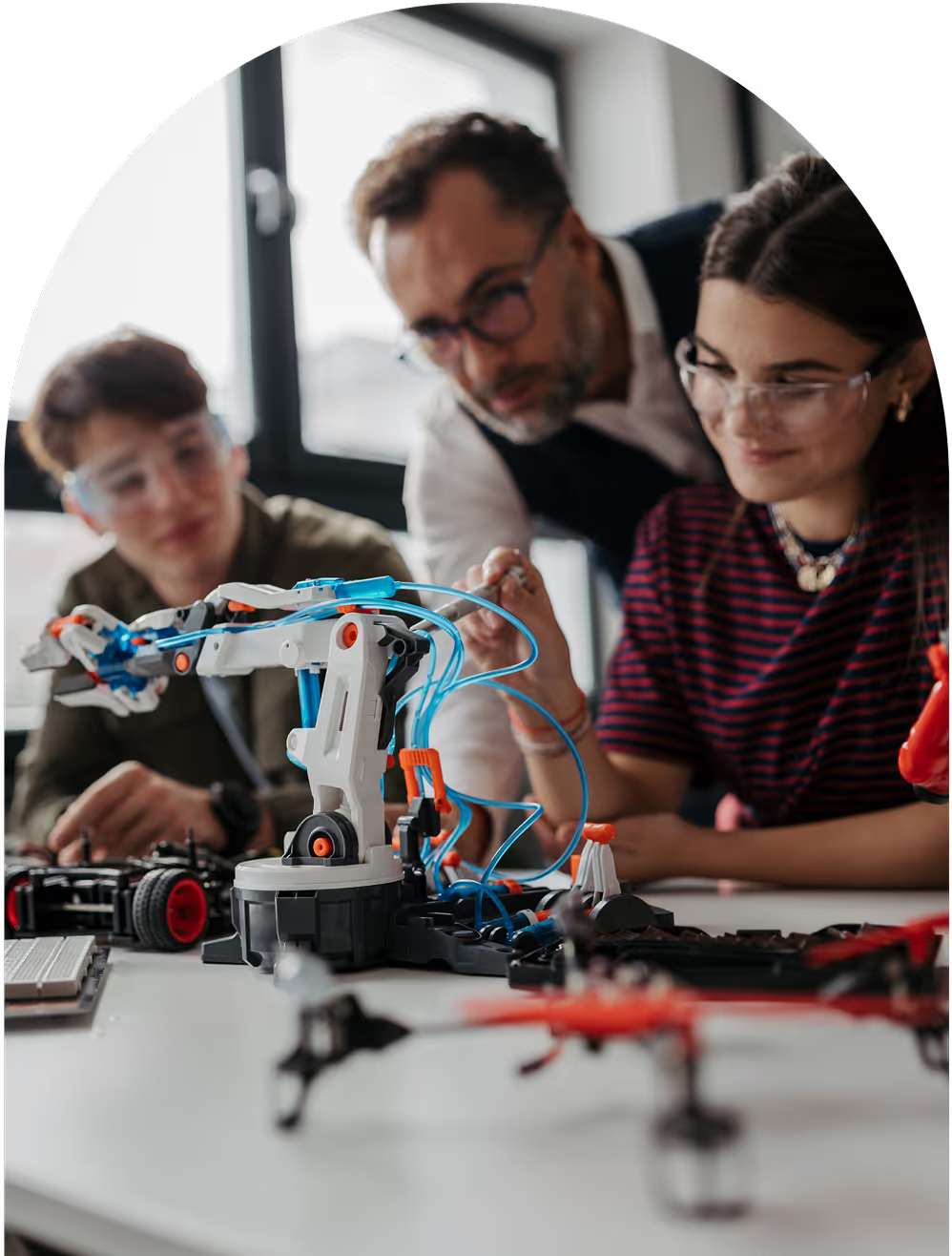
Strong instructional practices create meaningful learning experiences that help students grow, achieve, and succeed. This pathway equips educators with the strategies, tools, and confidence needed to deliver high-impact instruction every day.