



Designing Effective Math Workstations Using Data-Driven Instruction

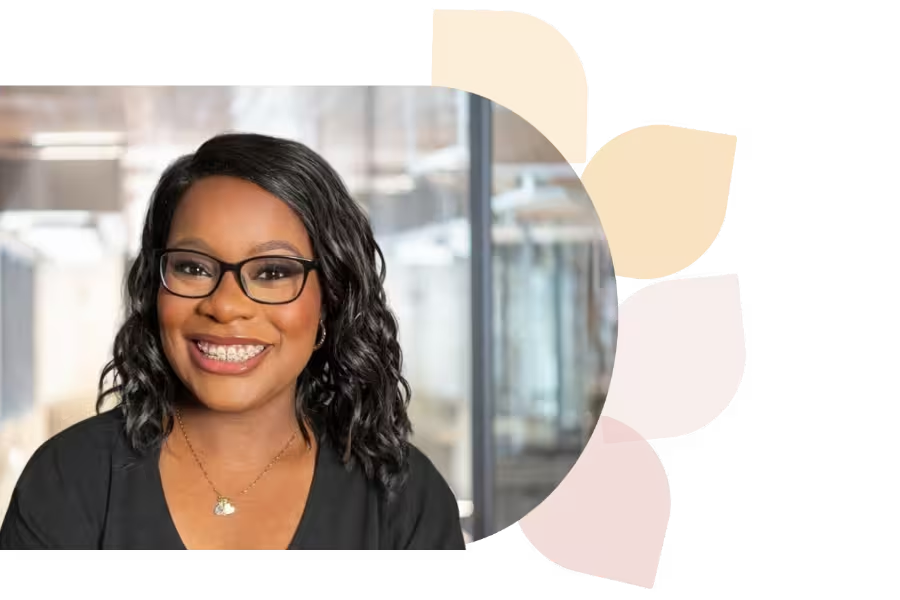
Keturah Mace
Presenter
60
mins
Course length
Multi Device
Access from mobile or laptop
4.92
Course rating
An adult and a child sitting at a table, working together on homework with notebooks and a smartphone nearby.
A sequence of black and white geometric shapes alternating between quarter circles and half circles arranged in a horizontal line.

Description

How can math workstations move beyond busy work and become powerful tools for engagement and learning? What if your mid-year data could guide more intentional rotations, targeted instruction, and stronger student outcomes? Math workstations are most effective when they are purposefully designed and grounded in student data. Research shows that structured rotations and differentiated tasks increase student independence, maximize instructional time, and support conceptual understanding. When educators use formative and benchmark data to inform workstation design, instruction becomes more responsive, targeted, and impactful. Join Keturah Mace as she guides educators through practical strategies for designing and implementing math workstations that truly work. This session focuses on using mid-year data to identify strengths and learning gaps, plan intentional rotations, and select standards-aligned tasks that meet the needs of all learners. Participants will explore how to leverage data to guide small-group instruction, differentiate effectively, and keep students meaningfully engaged as they work toward end-of-year proficiency.

Objectives

Analyze mid-year formative and benchmark data to identify student strengths, learning gaps, and instructional priorities. Design effective math workstations that promote student engagement, independence, and conceptual understanding. Plan intentional workstation rotations that maximize instructional time and support differentiated instruction. Select standards-aligned tasks that address identified needs and extend student thinking. Apply data-informed strategies to guide targeted small-group instruction for diverse learners. Evaluate and adjust instructional practices to support student progress toward end-of-year proficiency.

Key Take Aways

• Understand how to analyze mid-year formative and benchmark data to inform instructional decisions within math workstations. • Learn how to design engaging, standards-aligned math workstations that promote independence and conceptual understanding. • Explore intentional rotation structures that maximize instructional time and support differentiated learning. • Gain practical strategies for using data to guide targeted small-group instruction and extend student thinking.

Start your 7-day free trial today and explore this course at no cost.

Continue your learning with full access to our library of 1000+ courses, learning pathways and microcredentials to support your growth.

Meet

Keturah Mace

Keturah Mace is an instructional leader focused on professional learning, collaborative planning, and coaching. She facilitates science and math workshops, using data-informed practices to build teacher capacity, strengthen instruction, and advance equitable learning.
Specializes In:
K–5 Science/Math Specialist

Over 1,000 courses. 40+ topics. Unlimited potential.

The most comprehensive professional learning library available — designed to grow with you.
Arrow-icon-left
Arrow-icon-right

Ready to grow?

Unlock new strategies and skills—wherever you are in your teaching journey.

A teacher with curly hair and glasses shows a glowing light bulb to a group of smiling children gathered around a table.