



Using Quick Checks for Understanding to Inform Your Teaching

Chrissy Romano Arrabito
Presenter
30
mins
Course length
Multi Device
Access from mobile or laptop
Course rating
An adult and a child sitting at a table, working together on homework with notebooks and a smartphone nearby.
A sequence of black and white geometric shapes alternating between quarter circles and half circles arranged in a horizontal line.

Description

Formative assessment should do more than collect data. It should provide meaningful insights that help educators make informed instructional decisions. Looking for simple, effective ways to check for understanding without adding to your workload? In this course, Chrissy Romano shares practical formative assessment strategies designed specifically for K–2 classrooms. Educators will explore quick, developmentally appropriate techniques for gathering evidence of student learning, identifying misconceptions, and monitoring progress throughout the instructional day. Participants will also learn how to use assessment results to make real-time instructional adjustments that support student success. By the end of this course, educators will walk away with ready-to-implement formative assessment strategies, a toolkit of time-saving practices, and step-by-step guidance for using assessment data to drive instruction.

Objectives

  • Identify formative assessment strategies that effectively gather evidence of student learning.
  • Explain how formative assessment supports instructional decision-making and student growth.
  • Implement developmentally appropriate strategies for checking understanding during instruction.
  • Interpret assessment evidence to identify strengths, misconceptions, and learning gaps.
  • Assess the usefulness of formative assessment data in guiding instructional responses.
  • Develop a personalized toolkit of formative assessment practices that can be integrated into daily classroom routines.

Key Take Aways

  1. Understand the difference between formative assessment practices that provide actionable instructional information and those that do not.
  2. Learn quick and effective strategies for checking student understanding during instruction.
  3. Explore methods for identifying student strengths, needs, and misconceptions.
  4. Discover how to use formative assessment data to make timely instructional adjustments that improve learning outcomes.

Start your 7-day free trial today and explore this course at no cost.

Continue your learning with full access to our library of 1000+ courses, learning pathways and microcredentials to support your growth.

Meet

Chrissy Romano Arrabito

Chrissy Romano Arrabito is a 1st grade teacher at Nellie K. Parker Elementary in Hackensack, NJ, with 31+ years of experience. She’s passionate about teaching the whole child, fostering innovation, and creating authentic learning experiences to help her students grow and thrive in the classroom.
Specializes In:
1st Grade Teacher

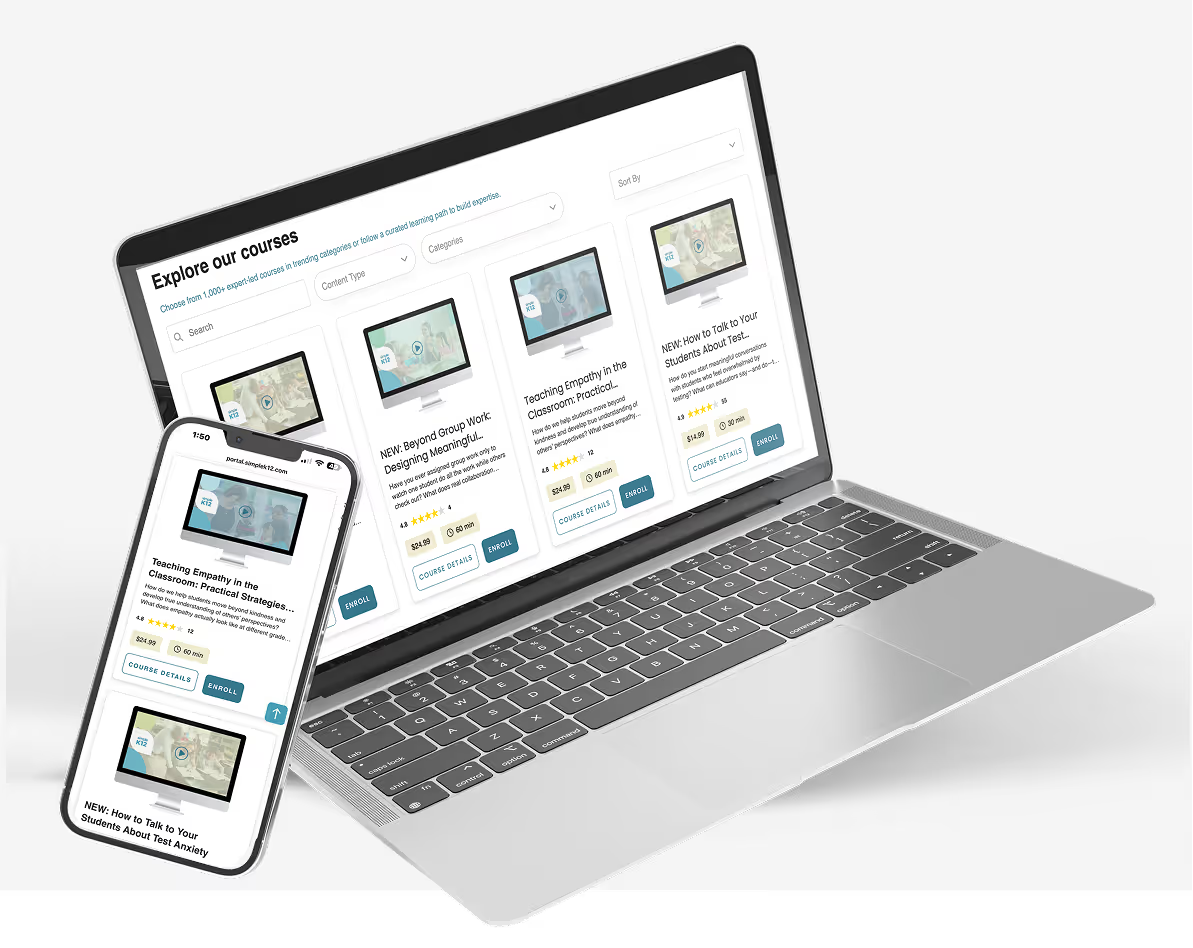
Over 1,000 courses. 40+ topics. Unlimited potential.

The most comprehensive professional learning library available — designed to grow with you.
Arrow-icon-left
Arrow-icon-right

Ready to grow?

Unlock new strategies and skills—wherever you are in your teaching journey.

A teacher with curly hair and glasses shows a glowing light bulb to a group of smiling children gathered around a table.